

Why Clear Evacuation Diagrams and Emergency Management Plans Are Essential for Aged Care Facilities in Melbourne and Victoria.
"Good Enough" Isn’t Enough
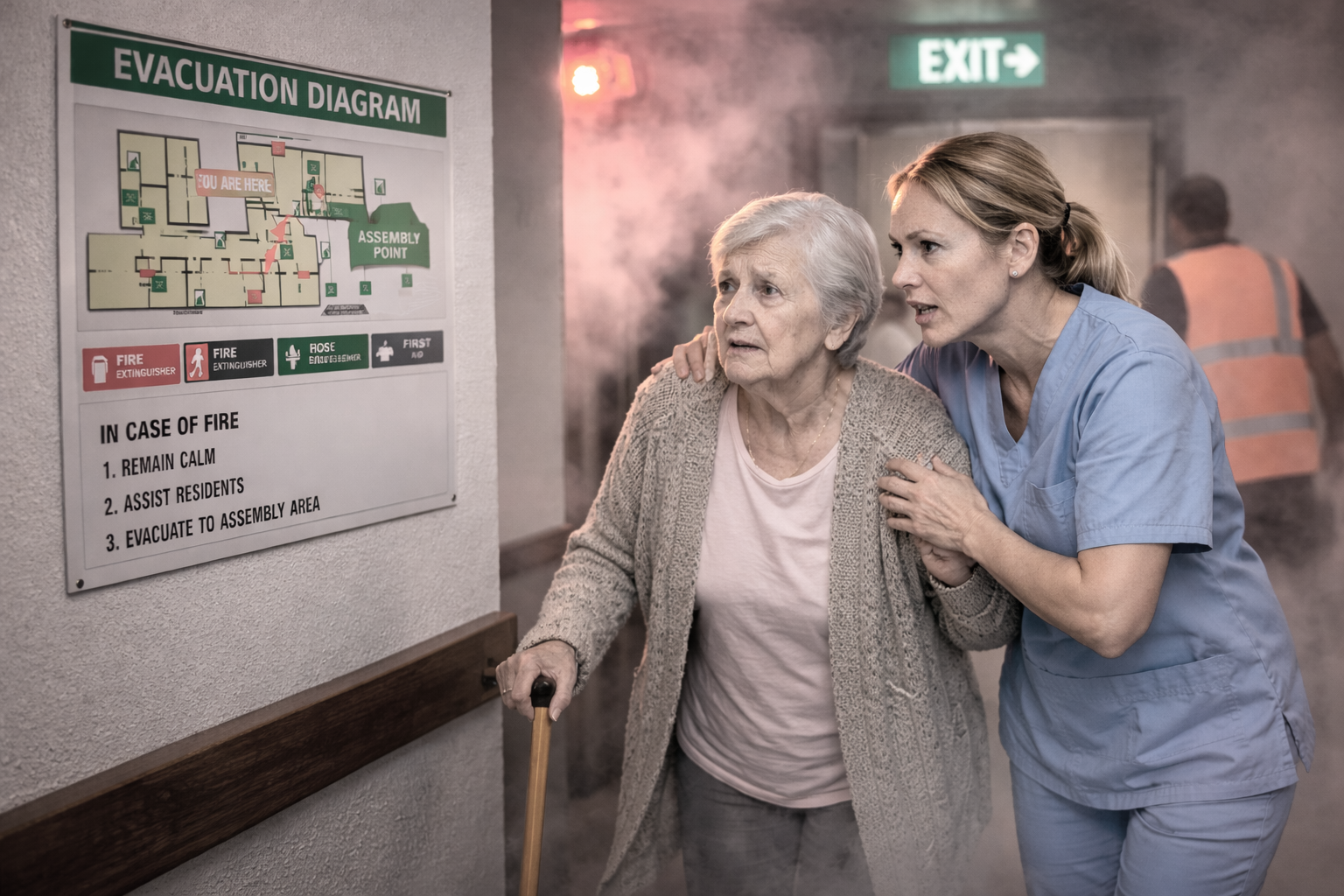
When we talk about fire safety in Melbourne’s aged care sector, we aren’t just talking about ticking boxes for a compliance auditor. We are talking about protecting the people who built our communities.
Across Melbourne and regional Victoria, residential aged care facilities care for some of our most vulnerable residents. In an emergency, there is no room for confusion, outdated paperwork, or unclear signage. A properly prepared Fire Management Plan and professionally designed evacuation diagrams are not optional extras — they are critical safety tools.
In Victoria, guidance from the Victorian Department of Health and compliance with Standards Australia under Australian Standard AS 3745-2010 – Planning for Emergencies in Facilities set a high bar for emergency preparedness.
But beyond the regulations, there is a very human reason to get this right.
The Human Element: Why Readability Saves Lives
It’s a common misconception that because aged care residents have staff to assist them, evacuation diagrams don’t need to be “resident-friendly.” That thinking is risky.
During a fire alarm, smoke reduces visibility. Noise levels rise. Anxiety increases. Even residents who are normally confident and mobile can become disoriented.
A clear, easy-to-read evacuation diagram becomes a silent guide.
Even though residents will be supported by care workers, many can still interpret simple directions if presented clearly.
A well-designed fire exit plan helps:
Mobile Residents: Those who can move independently need to know the shortest route without hesitation.
Visitors and Families: People unfamiliar with your building’s layout.
Contractors and Temporary Staff: Those who haven't undergone extensive site induction.
Cognitive Support: Residents with early-stage dementia benefit from high-contrast colours, large fonts, and simple symbols. Confusing layouts or cluttered diagrams create hesitation—and in a fire, hesitation wastes life-saving time.
Empowering Staff with Precision Under Pressure
Your care workers are trained professionals. But in an emergency, they are making split-second decisions while assisting residents with complex needs.
Under AS 3745-2010, evacuation diagrams must be strategically located throughout a facility. These are not decorative wall maps — they are tactical tools.
For staff, properly positioned and compliant evacuation diagrams allow:
Immediate identification of primary and secondary exits
Quick location of fire extinguishers, hose reels and fire blankets
Clear direction to designated assembly areas
Confidence when usual pathways are blocked by smoke
In Melbourne’s multi-level aged care buildings, or larger facilities across regional Victoria, layout complexity increases risk. Clear diagrams eliminate guesswork.
During Victoria’s summer fire season — or even in a winter electrical fault scenario — safely moving residents to an external assembly area quickly can be the difference between a contained incident and a catastrophic outcome.
What Makes an Evacuation Diagram Readable for the Elderly?
High Contrast Colours
Essential for residents with reduced vision.
Correct Orientation
If the “You Are Here” point does not match the viewer’s standing position, the diagram creates confusion rather than clarity.
Simplicity
Removing architectural clutter so exit paths stand out immediately.
Clear Exit and Assembly Markings
Residents should be able to identify where they are going — not just how to leave the building.
When readability is prioritised, cooperation improves, anxiety decreases, and evacuation becomes more controlled.
The Components of a Proper Emergency Management Plan (EMP)
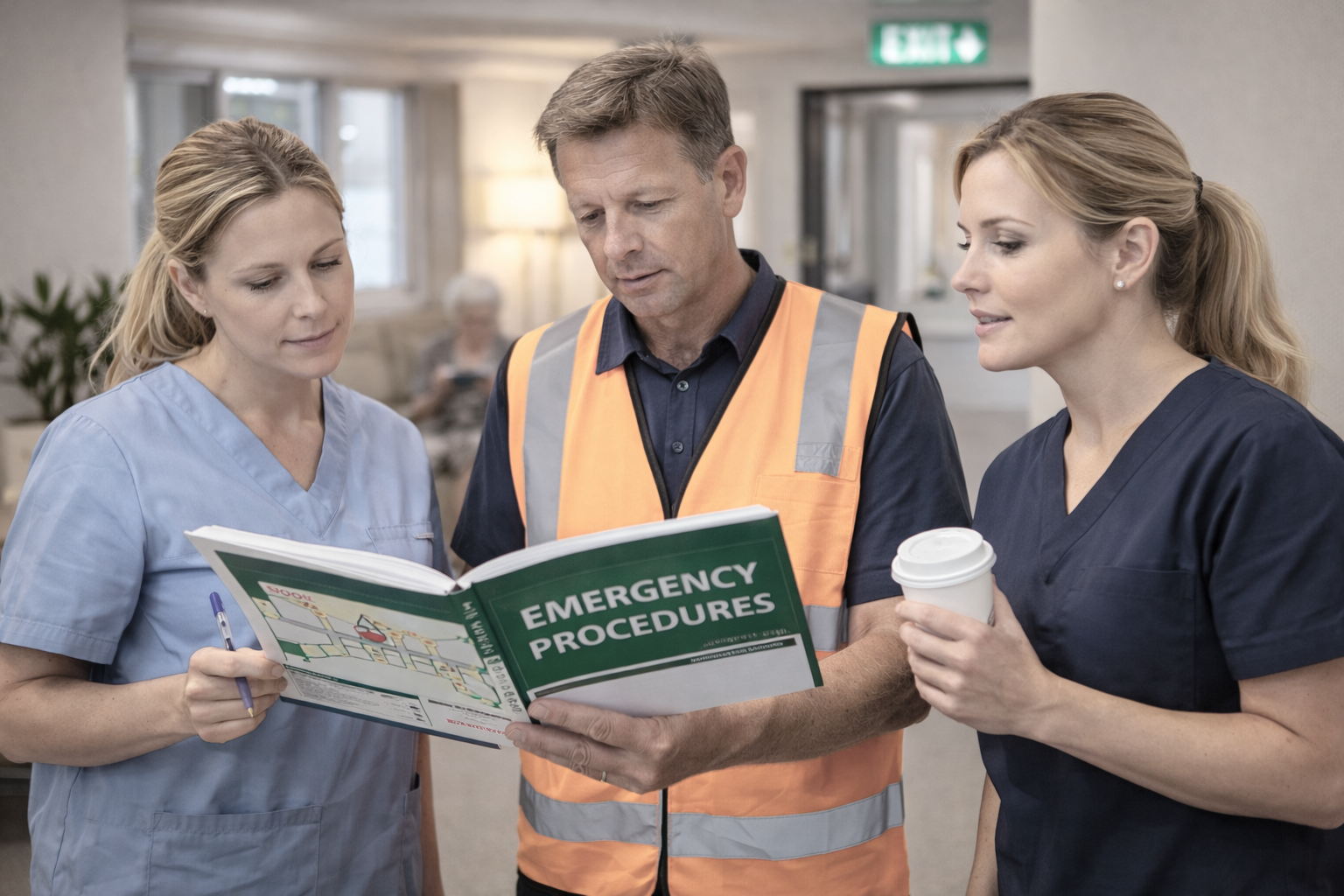
An evacuation diagram is only one piece of the puzzle.
Victoria’s regulatory framework for Residential Aged Care Services is stringent for a reason. Emergency preparedness is not a static document stored in a filing cabinet.
A proper Fire Management Plan for Victorian aged care facilities should include:
Clearly defined Chief Warden and Floor Warden responsibilities
Regular staff training and evacuation drills
Procedures for residents with mobility limitations
Communication protocols with emergency services
Updated evacuation diagrams reflecting renovations or layout changes
Melbourne & Victoria: Local Risk Factors Matter
Facilities in Melbourne’s metropolitan areas face different risks to those in bushfire-prone outer suburbs or regional towns.
Emergency planning in Victoria must consider:
Bushfire risk zones
Extreme heat events
Flood-prone locations
High-density urban sites
Multi-storey buildings
An effective Emergency Management Plan aligns evacuation diagrams with real-world local risks — not generic templates.
Preparedness should be reviewed whenever:
Renovations occur
Room layouts change
Resident mobility profiles shift
Regulations are updated
“Good enough” quickly becomes outdated.
A strong EMP ensures that response is structured rather than chaotic, clearly outlining roles, communication chains, and assembly area coordination.
If your diagrams are faded, outdated, incorrectly oriented, or installed in poor locations, your facility is exposed — not just legally, but ethically.
In aged care, duty of care is everything.
The COAD88 EVAC PLAN Difference
At COAD88 Evac Plan, we specialise in creating Australian Standard-compliant evacuation diagrams tailored specifically for Melbourne and Victorian aged care providers.
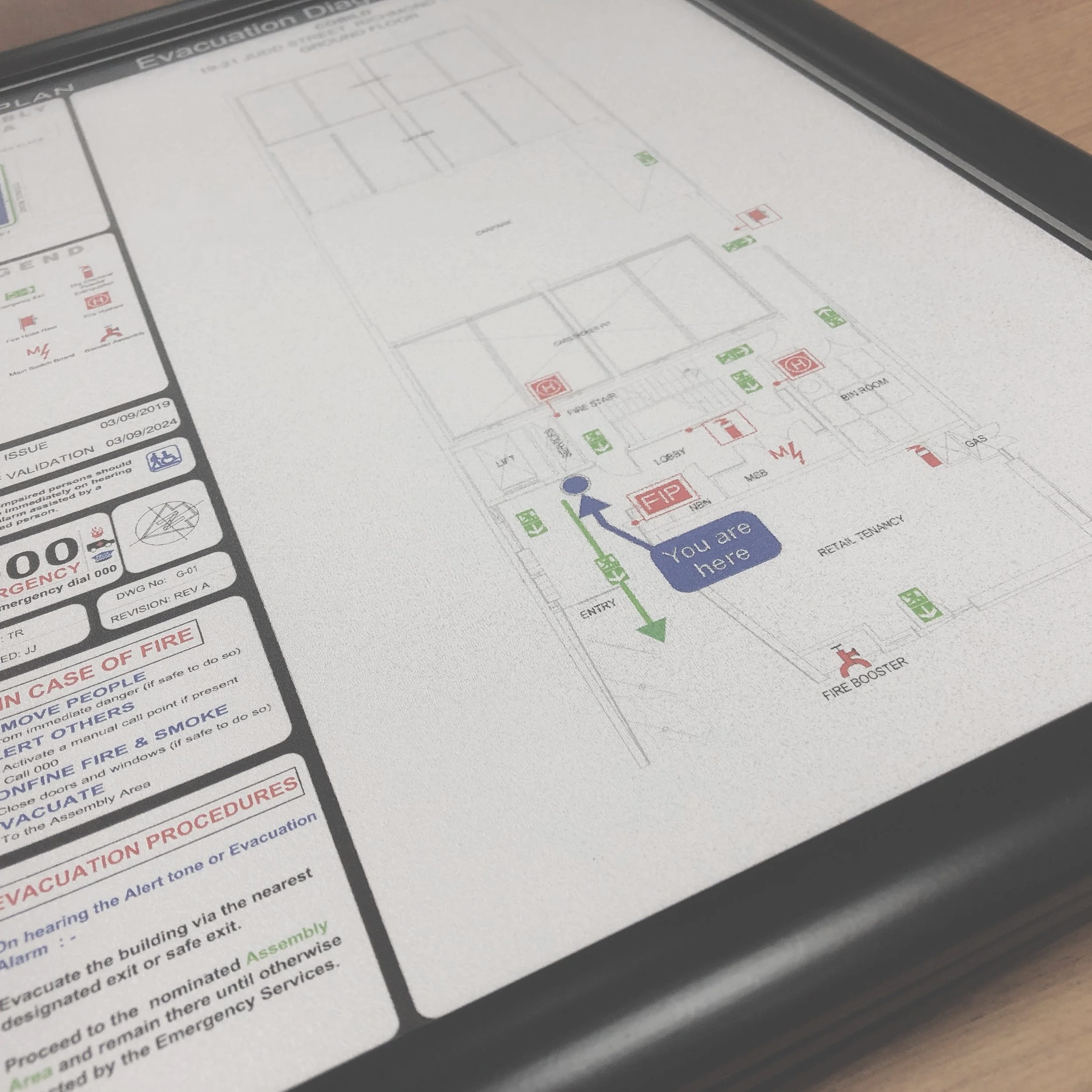
We understand these facilities are not just buildings — they are homes.
Our evacuation diagrams focus on:
Maximum readability
Accurate orientation
Strategic placement
Full AS 3745-2010 compliance
Alignment with Victorian Department of Health guidance
We work closely with aged care management teams to ensure every diagram supports both staff and residents in real-world emergency conditions.
Is Your Facility Truly Prepared?
Don’t wait for an inspection — or worse, an emergency — to discover gaps in your fire safety documentation.
Review your:
Fire Management Plan
Evacuation diagrams
Assembly area signage
Staff training records
If anything is unclear, outdated or difficult to read, now is the time to act.
Protect your residents. Support your staff. Meet Victorian compliance standards with confidence.
Looking to update your facility’s fire safety plans?
Contact COAD88 EVAC PLAN for expert advice and AS 3745-2010 compliant evacuation diagrams across Melbourne and Victoria.